
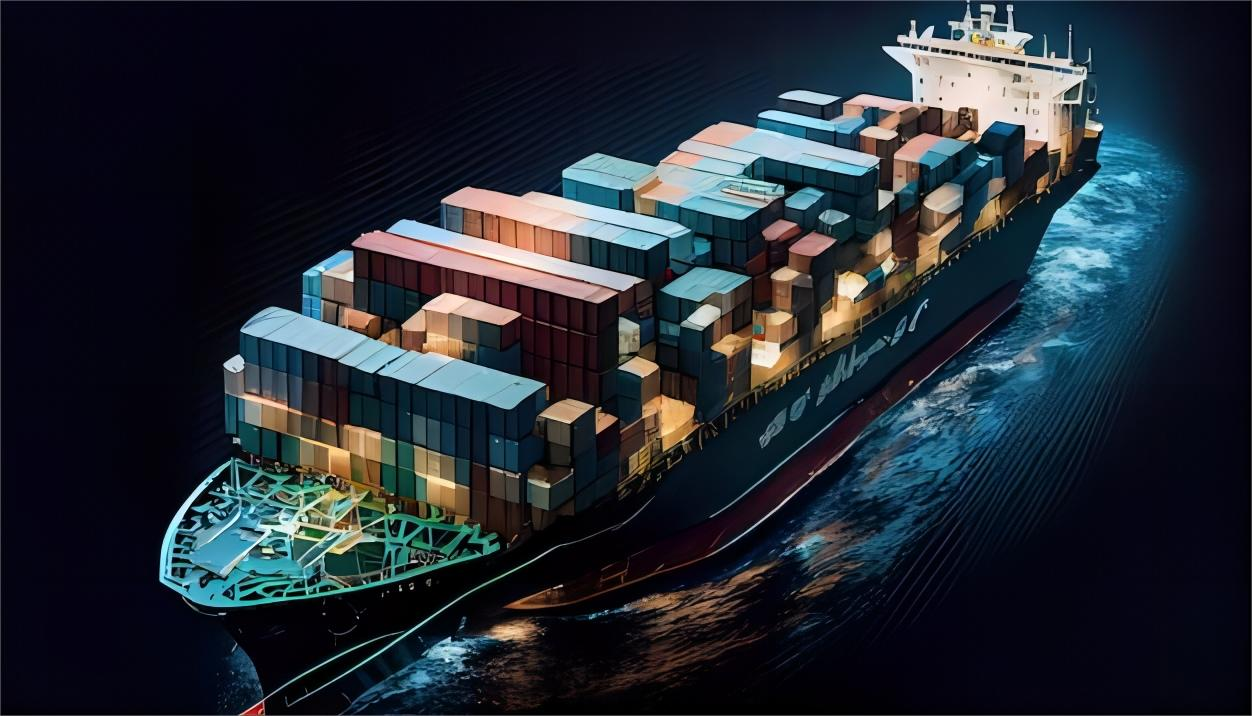
Hire Fulfillment Company Canada: 2026 Logistics Guide
Unclear all-in pricing frequently undermines sourcing decisions when evaluating Hire Fulfillment Company Canada against incomplete rate cards. Hidden accessorials, duty assumptions, and mismatched service scopes quickly inflate the real landed cost. Collaborating with a dedicated partner like VeloTactics Logistics LLC brings line-item clarity before you award the move. Explore service-boundary checks, documentation gates, and cost questions in this 2026 operational guide.
Key Takeaways
A 40HQ container provides approximately 68-76 CBM of usable space; target 65-70 CBM for optimal palletized loading.
Air chargeable weight is calculated as the higher of actual weight or volumetric weight (L x W x H cm / 6000).
Standard door-to-door transit for ocean freight typically ranges between 22-35 days depending on port congestion.
Documentation such as the Commercial Invoice and Packing List must be finalized at least 48 hours before export cut-off.
Landed costs should include all destination accessorials, not just the base freight rate, to avoid arrival shocks.
What Should Buyers Know First About Canada Shipments?
Buyers must prioritize operational transparency over low-ball base rates when they hire fulfillment company Canada. The primary challenge in this market is the variance between quote-stage estimates and final-mile delivery costs.
Effective fulfillment requires a clear understanding of the service scope, including whether the provider offers comprehensive freight forwarding, customs brokerage, or just final-mile distribution. Without this, you risk significant supply chain friction.
Common mistake: Focusing solely on the per-CBM rate while ignoring destination accessorials.
Risk alert: Missing documentation or inaccurate shipping marks at CFS intake triggers mandatory export holds.
How Do Routing and Gateway Choices Affect This Lane?
Routing choices directly dictate your lead time and total landed cost, particularly when you navigate the complex logistics landscape of North American gateways. Selecting the correct port or airport depends on the final destination's proximity to your primary distribution node.
For example, transit through West Coast ports often differs in dwell time compared to East Coast hubs. Aligning your routing with the specific cargo-ready date is essential to avoid unnecessary storage fees.
| Accessorial Charge | Standard Free Window | Typical USD Band | Trigger Condition |
|---|---|---|---|
| Driver detention | First 2 hours free | $75 – $120 / hour | Dock dwell past free window |
| Border layover surcharge | Same-day clearance | $350 – $600 / night | Secondary exam / bad e-Manifest |
| Liftgate / inside delivery | Dock-to-dock standard | $125 – $250 / service | No commercial loading dock |
| Pallet restrap & re-wrap | Origin inspected | $30 – $60 / pallet | Shift or damaged wrap at cross-dock |
Common mistake: Routing through a congested gateway to save on base ocean rates.
Risk alert: Late supplier CRDs past CFS receiving force split shipments and storage fees.
Critical Checklist: Documents and Compliance on This Lane
Mandatory documentation for this lane must be accurate to prevent customs holds and regulatory penalties. Key documents include the Commercial Invoice, Packing List, and the transport-specific document (AWB for air or B/L for ocean).
Compliance checks also extend to HTS classification and potential duty assessments. Working with a professional logistics provider ensures that your filings meet all local requirements before the cargo arrives.
Common mistake: Submitting incomplete HTS codes, leading to classification disputes.
Risk alert: Failure to provide a valid Importer of Record number will result in immediate customs seizure.
What Transit Timeline Should You Expect?
Transit timelines are highly dependent on the chosen mode and seasonal capacity constraints. Generally, air transit takes 3-7 days, while ocean freight typically ranges from 22 to 35 days door-to-door.
These timelines are averages; peak seasons can add significant buffer time to your scheduling.
| Route Leg | Mainhaul Transit | Customs & Dwell | Total Lead Time |
|---|---|---|---|
| Standard Ocean | 22-28 Days | 3-5 Days | 25-33 Days |
| Standard Air | 3-5 Days | 1-2 Days | 4-7 Days |
| Peak Season Ocean | 28-35 Days | 7-10 Days | 35-45 Days |
Common mistake: Failing to account for customs clearance dwell time in the total lead calculation.
Risk alert: Destination CFS free dwell is often only 3–5 days—unclaimed LCL accrues fast.
How Are Landed Costs Typically Built?
Landed costs are built by aggregating the base freight rate, origin charges, duty/tax, and destination accessorials. When you hire fulfillment company Canada, ensure these are itemized in your proposal to avoid post-arrival surprises.
Understanding the difference between an 'all-in' quote and a 'base-only' quote is the first step toward accurate financial forecasting.
CFS handling, storage, and non-stackable fees can eclipse the base LCL rate when marks, free dwell, and pallet density are not locked before cargo-ready. Requesting a transparent, fully itemized breakdown prevents unexpected port holds and destination invoice shocks.
Common mistake: Overlooking destination delivery fees, which can account for 20% of total costs.
Risk alert: Missing documentation or inaccurate shipping marks at CFS intake triggers mandatory export holds.
Which Documents and Compliance Checks Apply?
Compliance checks involve verifying the validity of the shipper, the accuracy of the commercial value, and adherence to trade agreements. Essential filings include security declarations and, where required, specialized permits for specific commodities.
Always verify your customs clearance requirements before booking to avoid unexpected delays.
Common mistake: Ignoring the requirement for a valid Bond if one is needed for the specific entry type.
Risk alert: Late supplier CRDs past CFS receiving force split shipments and storage fees.
How Do Peak Seasons Affect Capacity and Pricing?
Peak seasons, typically Q3 and Q4, cause significant spikes in both pricing and transit times. During these periods, space is limited, and carriers often apply peak season surcharges.
Planning your bookings at least 4-6 weeks in advance is critical during these high-demand windows.
Common mistake: Waiting until the last minute to secure space during Q4, resulting in massive premium costs.
Risk alert: Expect capacity shortages to impact transit consistency during peak months.
What Is the Step-by-Step Process from Quote to Delivery?
The process begins with a detailed shipment profile capture and ends with final-mile delivery to your warehouse or customer. Each step requires verification of cargo status to ensure no exceptions occur.
By following a disciplined operational framework, you can minimize the risk of disruptions.
Common mistake: Skipping the milestone tracking phase, leaving you blind to potential exceptions.
Risk alert: Destination CFS free dwell is often only 3–5 days—unclaimed LCL accrues fast.
Decision Framework
By volume: Capture CBM/kg first; under ~2 CBM often fits express/air, mid volumes need LCL/FCL comparison, and oversized lots require dedicated equipment quotes.
By speed: Urgent windows under ~7 days favor air/express; standard replenishment can use ocean or multimodal once cargo-ready timing is locked.
By cargo profile: Flag DG, temperature-control, or oversized handling before award—these change both documentation and carrier acceptance paths.
Execution Checklist for Hire Fulfillment Company Canada
Treat Hire Fulfillment Company Canada as a scoped booking problem: profile, mode, compliance, then space.
Keep fee exclusions and cut-offs written before award to avoid post-arrival surprises on Hire Fulfillment Company Canada.
Process and Checkpoints
Shipment Profile Capture
Confirm cargo-ready date, CBM/weight, commodity, HS code, and Incoterms.
Mode & Service Scope Selection
Compare air / LCL / FCL (or specialty) against transit and landed-cost targets.
Documentation & Compliance Gate
Align commercial invoice, packing list, and any specialty filings before booking.
Space Booking & Cut-off Lock
Reserve carrier/co-loader space and confirm export cut-off windows in writing.
Mainhaul & Milestone Tracking
Monitor departure, arrival, and exception alerts against the awarded transit plan.
Destination Release & Delivery
Clear destination formalities and complete final-mile delivery to the agreed door.
Confirm the right route for your shipment
Ready for a scoped proposal on Hire Fulfillment Company Canada? Share origin/destination, cargo-ready date, CBM/weight, commodity, and Incoterms.
Request a route reviewFrequently Asked Questions
How does the 1:167 volumetric ratio affect LCL freight invoices?
Carriers bill the greater of actual weight or volumetric weight using about 167 kg per CBM. Light cartons often pay on volume.
What happens if supplier cargo arrives after the CFS consolidation cut-off?
Late lots are typically rolled to the next consolidation cycle, accruing storage and risking split shipments.
How can multi-supplier shippers prevent CFS dead-space penalties during consolidation?
Declare stackability, use ISPM-15 pallets, and share carton dimensions early so CFS can plan density.
Which shipping marks must match the house Bill of Lading for LCL cargo?
Carton and pallet marks must match the house B/L description exactly to avoid relabel fees.
When should buyers switch from CFS LCL to a dedicated FCL buy-out?
Around 15 CBM and above, an FCL buy-out often beats shared CFS unit costs—especially with non-stackable freight.
Where does the forwarder take custody of multi-supplier cargo at origin?
Custody usually transfers at CFS receiving after piece count and mark checks.
Rates and surcharges fluctuate; request an itemized quote.
Informational only; not binding legal/tax/customs advice.
Benchmarks reflect standard 2026 practice for this corridor.